PENDULUM SPREADER VS. SPIN SPREADER
WHICH ONE IS RIGHT FOR YOU?

When it comes to distributing granular materials such as fertilizers, seeds, and ice melt, choosing the right equipment can make all the difference in efficiency and accuracy. Two popular types of spreaders, pendulum spreaders and spin spreaders offer distinct advantages and drawbacks. Let’s break down their differences to help you decide which one suits your needs best.

Hop
Turbo-Hop 301

Pendulum spreaders

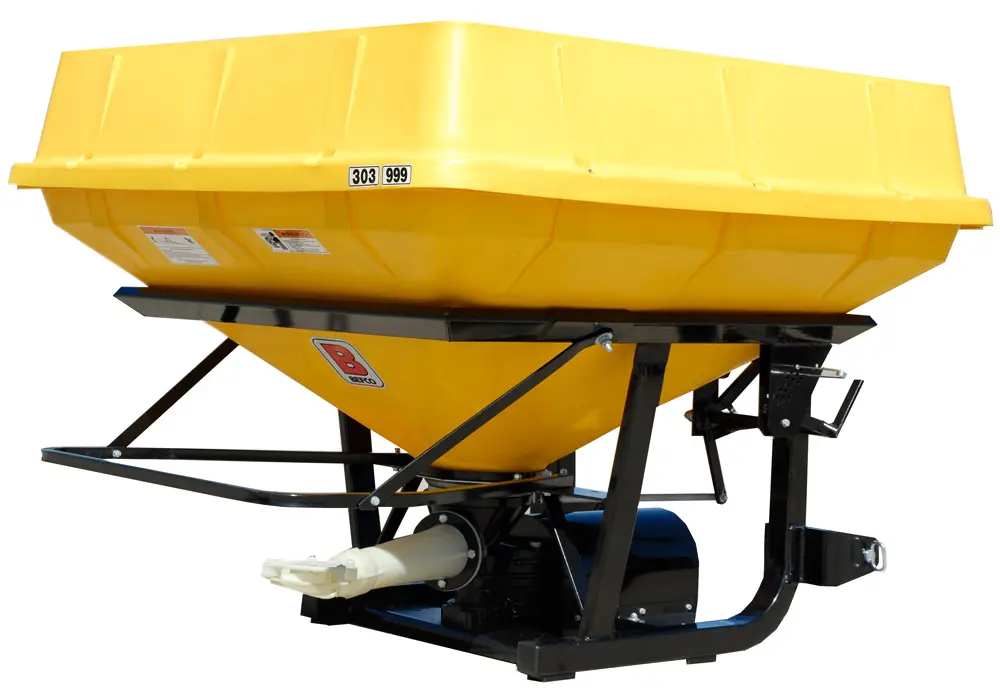
A pendulum spreader uses a swinging arm (pendulum) to distribute material. As the pendulum swings, it releases the material through an opening at the end of the spout, allowing for a controlled spread pattern. The spread width can be adjusted by changing the spout of the pendulum or the speed of the PTO. The pendulum mechanism allows for a more uniform spread pattern. Users can easily adjust the spread width, making it versatile for different applications. The precise metering minimizes the risk of over-application, reducing expensive waste. Generally built with robust materials, pendulum spreaders are premium units built to withstand heavy use and harsh conditions.

Advantages:
1. Even Distribution: The pendulum mechanism allows for a more uniform spread pattern, especially at wider widths.

2. Adjustable Spread Width: Users can easily adjust the spread width, making it versatile for different applications.

3. Less Material Waste: The controlled release minimizes the risk of over-application, reducing waste and environmental impact.

4. Durability: Generally built with robust materials, pendulum spreaders can withstand heavy use and harsh conditions.

Disadvantages:
1. Speed Limitations: They may not be as fast as spin spreaders, especially over large areas.

2. Maintenance: The pendulum mechanism may require more maintenance due to more moving parts requiring maintenance.

3.Cost: Pendulum spreaders are generally more expensive than spin spreaders.

Spin (or Broadcast) spreaders

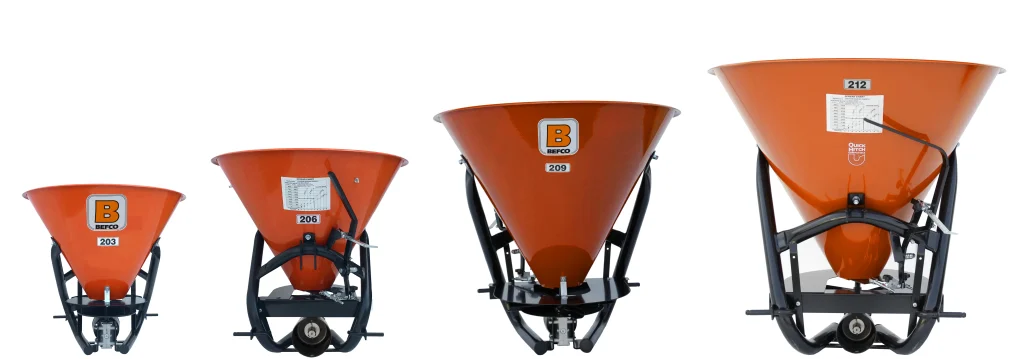
a Spin spreader (often also referred to as a broadcast spreader or just fertilizer spreader) uses rotating discs to fling material outward in a circular pattern. The spread width depends on the speed of the spinning disc and the type of material being spread. Spin spreaders are easy to operate and can cover large areas quickly, making them ideal quick jobs where precision is not as important. Spin spreaders also have fewer moving parts and often require less maintenance.

Advantages:

1. Speed and Efficiency: Spin spreaders can cover large areas quickly, making them ideal for large-scale applications.

2. Simplicity: Generally easier to operate and calibrate than pendulum spreaders, with fewer moving parts.

3. Versatile Material Handling: Can handle a variety of materials, including lighter granules and larger particles.

4. Less Maintenance: With fewer moving parts, spin spreaders often require less maintenance.

Disadvantages:

1. Less precision: The spread pattern can be less uniform, especially at wider settings, leading to potential over-application or under-application in certain areas.

2. Wind sensitivity: Wind can affect the spread pattern, causing uneven distribution and potential waste.

3. Material limitations: Some spin spreaders may struggle with heavier or larger materials, which can clog the mechanism.

4. Environmental Concerns: The potential for drift can lead to environmental issues, especially when applying fertilizers near sensitive areas.

5. Durability: Broadcast spreaders are more price conscious and therefore often wont last as long, especially if not properly cleaned and maintained.
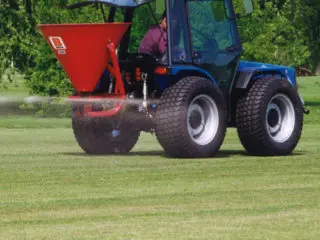

Which spreader should you choose?

Choose a broadcast spreader if you’re covering large, open acreage, want to finish faster and even coverage down to the last granule isn’t critical. It’s the simpler, more economical option and it’s hard to beat for pasture, fields and general fertilizing.

Choose a pendulum spreader if you care about an even, professional result — turf, sports fields, orchards, or anywhere striping would show — or if you switch between materials like fertilizer, lime, seed, sand and salt and want consistent results without constant recalibration.

Plenty of operators end up owning one of each, but for most tractor owners the decision comes down to that single question: maximum speed and value, or maximum evenness and versatility?

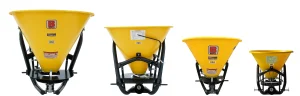
BEFCO broadcast spreaders

BEFCO Pendulum spreaders